
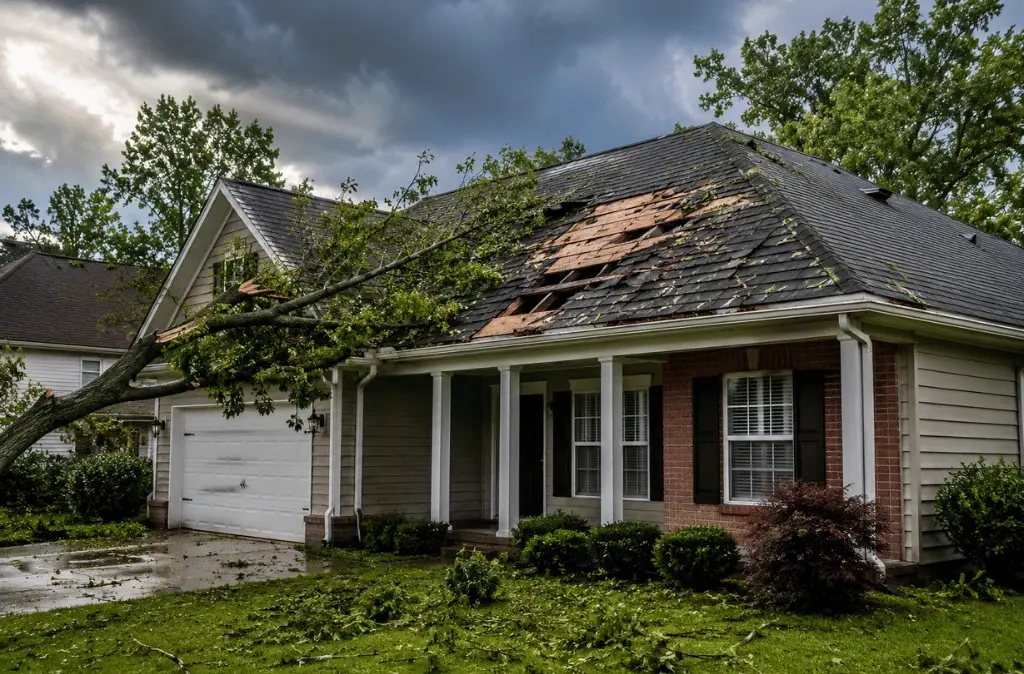
Storms are part of life in Georgia, but the damage they leave behind often raises difficult insurance questions. If you’ve ever wondered “Does homeowners insurance cover storm damage roof repair?”, the answer depends on what caused the damage and what your policy includes. This is why knowing how coverage works before severe weather arrives is really important.
Georgia Storms Can Put Any Roof at Risk
Georgia experiences strong thunderstorms, hail, heavy winds, and falling trees throughout the year. These weather events can damage roofing materials within minutes, even when a roof appears solid from the ground.
As of August 2026, Atlanta has recorded 267 verified hail days meeting the National Weather Service severe threshold of hail at least one inch in diameter between 2014 and 2026. Those storms have increased the chances of damaged shingles, cracked flashing, and roof leaks across many parts of the state.
Besides hail damage, strong gusts can lift shingles or loosen roofing materials. Large branches and falling trees may also cause structural damage that requires immediate attention. Understanding your insurance policy before the next storm arrives can make the claims process much less stressful.

Homeowners Insurance Covers Storm Damage Roof Repair
In many situations, yes. Most homeowners insurance policies in Georgia cover sudden and accidental roof damage caused by covered events such as hailstorms, high winds, or tree damage. The important distinction is that insurance covers unexpected damage rather than problems caused by age, neglect, or poor maintenance.
For example, if a severe storm tears shingles from your roof, your claim is generally eligible for coverage. If the shingles were already worn out before the storm, the insurer may reduce or deny payment because normal deterioration is not considered a covered loss.
Your insurance adjuster will look for evidence showing that the storm directly caused the damage. Fresh impact marks, broken shingles, or recently fallen trees can support your claim. Long-term wear usually will not.
Before filing, compare the expected repair cost with your deductible for roof repair in Georgia.If the cost of roof repair in Georgia is only slightly more than your deductible, paying for the work yourself may be the better financial choice. Larger losses often justify filing a claim.
Actual Cash Value vs. Replacement Cost Value for Your Roof
One of the biggest factors affecting your payment is the type of coverage listed in your policy.
Actual Cash Value (ACV)
An ACV policy pays the value of your roof after depreciation is deducted. Older roofs usually receive smaller settlements because age reduces their calculated value. This often leaves homeowners paying a significant portion of the roof repair cost themselves.
Replacement Cost Value (RCV)
A Replacement Cost Value (RCV) policy pays the cost to replace damaged roofing materials with similar products after your deductible is applied. Although these policies generally cost more, they provide stronger financial protection after major storms because depreciation does not reduce the final payment in the same way.
Before storm season, review your declarations page or speak with your insurance representative so you understand whether your policy provides ACV or replacement cost value coverage.
Feature | Actual Cash Value (ACV) | Replacement Cost Value (RCV) |
How payment is calculated | Replacement cost minus depreciation | Full replacement cost with similar materials |
Your out-of-pocket cost | Usually higher | Usually lower after deductible |
Best suited for | Older roofs | Newer roofs |
Claim payout | Reduced because of roof age | Higher because depreciation is not deducted |
Premium | Lower | Higher |

Georgia Roofing Myths That Can Affect Your Claim
Storms often bring confusion along with roof damage. Homeowners hear advice from neighbors, contractors, and even social media that sounds convincing but is not always accurate.
Myth 1: Georgia Has a 25% Roof Replacement Rule
This is one of the most common misconceptions. The so-called 25% replacement rule comes from Florida’s building code. It is not a Georgia law. If only part of your roof is damaged during a storm, your insurer is not automatically required to pay for a complete roof replacement simply because more than a quarter of the roof is affected.
Some contractors may mention this rule after severe storms, but homeowners should remember that Georgia follows different regulations. Always verify information before approving major work or signing a repair contract.
Myth 2: Insurance Must Replace the Entire Roof if New Shingles Don't Match
This is another misunderstanding. Georgia currently has no statewide matching law. If one section of your roof is damaged, your insurance company may only approve repairs for that damaged area. They are generally not required to replace the entire roof simply because the new shingles look different from the older ones.
Although HB 1310 has attempted to address matching requirements, there is still no statewide rule requiring insurers to replace an entire roof for cosmetic consistency as of May 2026. If having a uniform appearance matters to you, you may need to pay the difference between the insurance payment and the cost of a full replacement.
Filing Roof Storm Damage Claim in Georgia
Taking the right steps immediately after a storm can improve your chances of a smoother claim and a fair settlement.
Protect Your Home First
If the roof has been damaged, prevent additional water from entering your home. Temporary coverings or other emergency roof repair measures are appropriate until the property can be inspected. Avoid making permanent repairs before your insurance company has documented the damage. Take clear photos and videos from a safe location as soon as possible.
Arrange a Professional Roof Inspection
Before contacting your insurer, schedule an inspection with a qualified local roofing professional.
A detailed inspection can identify storm-related issues that are easy to miss from the ground. Good documentation, including photographs and written findings, can also support your claim during the inspection process.
Report the Damage
Once you understand the extent of the damage, contact your insurance provider to begin filing roof storm damage claim in Georgia. During the claim, confirm your deductible, review your policy limits, and understand the type of settlement your policy provides. Having this information early helps set realistic expectations.
Meet With the Insurance Adjuster in Georgia
Clear documentation can help if questions arise about wind damage roof insurance in Georgia. It also supports your claim for hail damage roof insurance in Georgia, especially when storm-related damage is difficult to identify during an initial inspection.
Final Thoughts on “Does Homeowners Insurance Cover Storm Damage Roof Repair?
Storm damage can happen without warning, but understanding your coverage can help you respond with confidence. If you’re asking “Does homeowners insurance cover storm damage roof repair?”, the answer usually depends on the cause of the damage, your policy terms, and the condition of your roof before the storm.
Atlas Roofing and Restoration has helped homeowners across Georgia deal with roof damage after storms. We inspect the roof, explain what we find, and help you understand your repair options. If your roof needs repairs or replacement, we complete the work carefully using quality materials and keep you informed from start to finish.
Frequently Asked Questions
How Do I File a Roof Damage Claim with My Insurance in Georgia?
Start by taking photos of the damage and arranging a professional roof inspection. Then contact your insurance company, submit the required documents, and meet with the insurance adjuster to complete the claim process.
Does Georgia Homeowners Insurance Cover Old Roof Damage?
In most cases, no. Homeowners insurance cover storm damage roof repair when the damage is sudden and caused by a covered event like hail or strong winds. Damage caused by age, normal wear, or poor maintenance is generally not covered.
Do I Need a Public Adjuster for a Roof Claim in Georgia?
Not always. Many homeowners can handle the claim directly with their insurance company. If your claim is denied, delayed, or involves a dispute over the settlement amount, a public adjuster may be worth considering.