
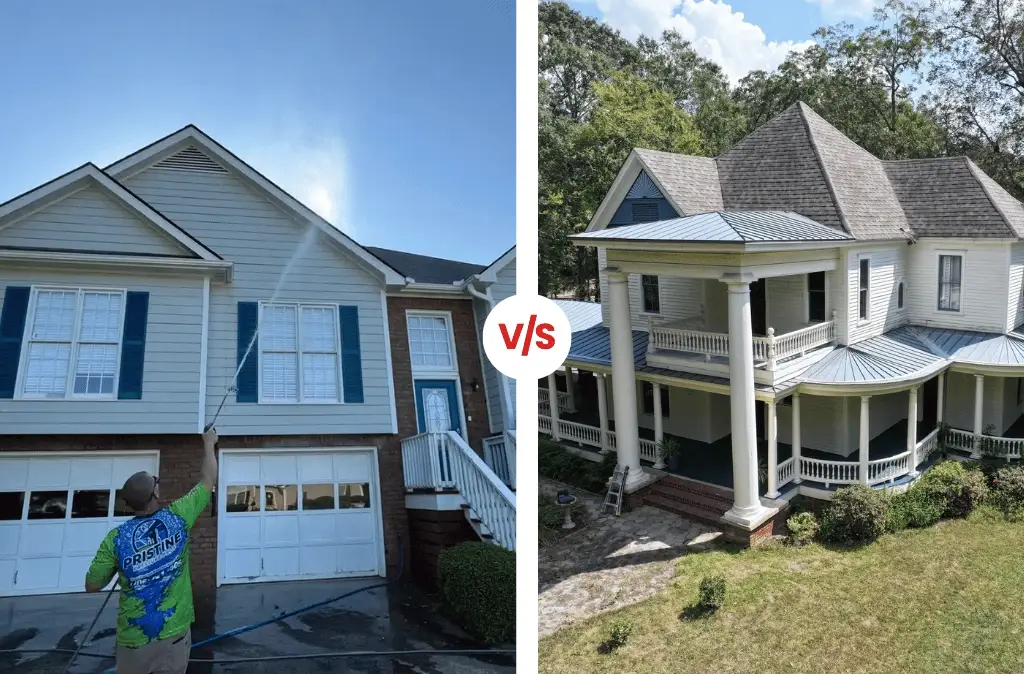
A dirty exterior can make a Georgia home look older than it really is. Homeowners often assume faded siding means a new paint job, but dirt, algae, and mildew can create a similar appearance. Pressure washing vs. repainting becomes easier to understand when you know what the surface is telling you. The right choice can improve appearance, protect the exterior, and avoid unnecessary work.
How to Tell Whether Your Exterior Needs Cleaning or Paint
The appearance of your siding can provide useful clues, but the difference between surface buildup and paint failure is not always obvious. Dirt usually creates a dull layer across the surface. Pollen can leave a yellowish film, while algae can create green or dark patches in damp areas. Mildew often appears around shaded sections where air movement remains limited.
Paint failure usually creates more permanent changes. Peeling edges, exposed material, cracking, bubbling, and widespread flaking can indicate a problem with the paint film. Severe fading can also signal that the coating has reached the end of its useful life.
A closer look can help separate the two problems. A dirty wall may regain much of its original appearance after proper cleaning. A damaged paint surface will still show cracks, peeling, or exposed areas after the contamination disappears.
What Mildew on House in Georgia Can Tell You
Mildew is more than an appearance problem. Persistent moisture can encourage organic growth on siding, trim, soffits, and other exterior areas. Shaded walls often provide the conditions that mildew needs. Trees and nearby structures can reduce sunlight and airflow, allowing moisture to remain on the surface longer. Mildew removal in Georgia also requires attention to the material underneath the growth.
Different siding materials can react differently to water pressure and cleaning solutions. Vinyl siding, painted wood, brick, stucco, and fiber cement do not all require the same cleaning approach. A proper cleaning method can remove surface growth without creating unnecessary damage. A harsh approach can create problems that were not present before the cleaning began.
Pressure Washing vs. Repainting for Different Exterior Problems
The right choice depends on what has actually happened to the exterior. Pressure washing can make sense when the main issue involves dirt, pollen, algae, or other surface contamination. Repainting becomes more appropriate when the existing coating has widespread damage or has reached the end of its service life. The table below provides a simple way to compare the two options.
Exterior Condition | Pressure Washing | Repainting |
Dirt and pollen buildup | Usually appropriate | Usually unnecessary |
Light algae staining | Often appropriate with the right method | Usually unnecessary |
Mildew on shaded siding | Can help remove surface growth | May be needed if paint has also deteriorated |
Faded but intact paint | May improve the appearance | Consider based on age and overall condition |
Peeling paint | Cleaning alone will not solve the problem | Usually appropriate |
Cracked paint film | Cleaning will not repair the coating | Usually appropriate |
Exposed wood or other substrate | Cleaning requires care | Repair and repainting may be needed |
Heavy staining on concrete | High pressure may work well | Not normally required |
This comparison does not replace an exterior home needs in Georgia. The condition of the material underneath the surface remains important.

When Pressure Washing Makes More Sense
Pressure washing in Georgia can restore the appearance of an exterior when contamination causes most of the discoloration. Homes near trees can collect leaves, pollen, and organic residue throughout the year. Driveways and walkways can also develop dirt and staining after repeated rain. Siding can collect mildew and algae when moisture remains on the surface.
The power washing benefits depend heavily on the surface and the cleaning method. High pressure does not automatically mean better cleaning. Excessive pressure can damage siding, strip away loose paint, or push water into areas where it can cause further problems.
Professional exterior cleaning often relies on a lower pressure approach for delicate materials. The cleaning solution does more of the work, while controlled water pressure removes the remaining residue.
The condition of the surface should determine the cleaning method. Concrete can generally tolerate more pressure than painted wood or certain siding materials. A careful approach can improve the appearance without turning a simple cleaning job into an exterior repair project.
When Repainting Becomes the Better Choice
Some exterior problems remain after cleaning because the paint itself has deteriorated. Peeling is one of the clearest signs. Cracks across several sections of the exterior can also indicate coating failure. Bubbling may point to moisture or adhesion problems that cleaning cannot resolve.
Severe chalking can create another concern. A chalky surface may release residue when someone rubs it. This condition can affect how well a new coating bonds with the existing surface.
The age of the paint also matters. Exterior painting in Georgia does not last forever, especially in a climate with strong sunlight, humidity, and frequent changes in weather. Exterior paint longevity depends on the paint quality, surface preparation, material, exposure, and maintenance history.
A repaint can make sense when several warning signs appear together. The surface may look faded, the coating may show cracking, and exposed areas may appear around windows or trim. Cleaning may improve the appearance for a short time, but it cannot restore a failed coating.
Why Surface Preparation Matters Before Repainting
A new coat of paint needs a clean and stable surface. Dirt, mildew, loose paint, and chalky residue can interfere with adhesion. Cleaning usually forms an important part of the preparation process. The exterior needs enough time to dry before primer or paint goes onto the surface. Georgia humidity can make drying slower than homeowners expect.
Paint adhesion issues can develop when moisture remains trapped beneath a new coating. The result can include blistering, peeling, or premature failure. The exterior surface types also influence preparation. Wood may require scraping or sanding where paint has lifted. Fiber cement may need a different preparation approach.
Vinyl siding can require careful cleaning before any coating work begins. A good paint job therefore starts long before the first brush or roller touches the wall. The existing surface needs to provide a sound foundation for the new coating.
What Homeowners Should Consider Before Choosing
The decision does not have to come down to appearance alone. Several factors can help determine which option makes more sense. The first factor involves the condition of the existing paint. Intact paint with dirt or mildew usually points toward cleaning. Widespread peeling or cracking usually points toward repair and repainting.
The second factor involves the exterior material. Different materials have different cleaning and painting requirements. A method that works well on concrete may not suit painted wood siding.
The third factor involves the source of the staining. Tree coverage, poor drainage, shaded walls, and persistent moisture can contribute to recurring growth. Cleaning the surface may solve the immediate appearance problem, but the underlying moisture source may still need attention.
The fourth factor involves the overall condition of the home. A small area of damaged paint may need localized repair rather than a complete repaint. A large number of damaged areas can make a full project more practical.
What About the Cost of Pressure Washing and Repainting
The cost of pressure washing in Georgia can vary from one home to another. Property size, surface area, material, level of buildup, accessibility, and the cleaning method can all affect the final price.
The cost of repainting a house in Georgia can vary even more. The size of the home, number of stories, surface condition, repairs, preparation work, paint quality, and number of coats can all influence the overall project. A cleaning project generally involves a smaller scope when the existing paint remains in good condition. A repaint can involve preparation, repairs, primer, multiple coats, and additional labor.
Homeowners should therefore compare the condition of the exterior rather than choosing an option based only on the initial price. A cheaper cleaning job may not make sense when the paint has already failed. A full repaint may also be unnecessary when dirt and mildew create most of the problem.
How Exterior Cleaning Can Support Home Value in Georgia
A well-maintained exterior can influence how people view a property. Clean siding, fresh-looking trim, and stain-free walkways can make a home appear better cared for. Home value in Georgia can depend on many factors, so exterior cleaning alone cannot determine what a property is worth. However, visible maintenance can contribute to overall curb appeal.
Regular cleaning can also help homeowners notice problems earlier. A clean surface makes peeling paint, damaged trim, cracked caulking, and other issues easier to spot. Early attention can prevent a small exterior concern from becoming a larger repair project. That makes routine exterior house maintenance in Georgia useful even when it does not need repainting.
Final Thoughts on Pressure Washing vs. Repainting
Pressure washing vs. repainting does not have one answer for every Georgia home. A dirty exterior does not always need new paint, while damaged paint cannot regain its strength through cleaning alone. The condition of the surface should guide the decision. Cleaning can address many common problems caused by Georgia weather. On the other hand, repainting can address genuine coating failure and worn exterior finishes.
Atlas Roofing and Restoration provides exterior services in Georgia and can help homeowners understand what their property actually needs. Our team offers both pressure washing and repainting services, so homeowners can choose the right solution based on the condition of their exterior rather than paying for work they may not need.
Frequently Asked Questions
Is It Better to Pressure Wash or Repaint My Georgia Home?
Pressure washing is a good choice when dirt, pollen, algae, or mildew makes the exterior look dirty. Repainting is better when the paint has peeling, cracks, bubbles, or other clear damage. The condition of the existing paint can help you decide which option your home needs.
What Are the Signs My Georgia Home Needs Repainting?
Peeling, cracking, bubbling, heavy fading, and exposed areas are common signs that your home may need repainting. Cleaning can improve the appearance, but it cannot fix paint that has already failed. A closer look at the surface can help determine whether a new coat of paint is needed.
Can Pressure Washing Damage My House Siding?
Pressure washing can damage some siding when too much pressure is used. It can strip loose paint, damage softer materials, or push water into unwanted areas. The right cleaning method depends on the type and condition of the siding.
How Does Weatherproofing in Georgia Protect Your Home?
Weatherproofing in Georgia helps protect your home from rain, humidity, strong sunlight, and changing temperatures. Good paint, sealed gaps, proper caulking, and well-maintained siding can help keep moisture out. These simple steps can also reduce damage and help your home’s exterior stay in good shape for longer.