
Winter brings snow, ice, and freezing nights, and it often brings problems to your roof, too. Many homeowners assume they have to wait for warmer weather before calling anyone. That assumption can be expensive. Roof repair in winter is possible, and in many cases it is the smarter choice.
What Are the Challenges of Winter Roof Repairs?
Cold weather does change how the job is handled. Crews move slower, materials behave differently, and the calendar depends on the forecast. None of that makes the work impossible. Anyone pricing a job in freezing weather has to plan around a few hard limits. The winter roof repair challenges listed here show up on almost every cold-season project.
Cold Temperatures Affect Roofing Materials
Asphalt shingles lose their flexibility once the thermometer drops below roughly 40 degrees. They can crack under a nail gun or split when bent over a ridge or valley, so crews often keep bundles in a heated space and carry up only what they need.
Flat systems such as TPO roofing rely on heat welding, and those seams take longer to bond properly in the cold. The self-sealing strips under each shingle also need sun and warmth to set, which means the bond may not finish until spring.
Ice and Snow Accumulation
A covered surface has to be cleared before anyone can inspect it, and clearing adds hours to the job. Frozen layers hide soft decking, loose fasteners, and the exact spot where water is getting in.
Footing is the bigger concern, since a thin glaze of ice on a slope is enough to end a workday. Steady ice dam prevention, such as raking the lower few feet of the slope after each storm, keeps buildup from returning halfway through the project.
Shorter Workdays
Daylight runs out by late afternoon, and no crew should be on a slope in the dark. Skilled roofing contractors plan smaller daily targets and build in time to dry the surface each morning before starting. A job that takes a single day in July may stretch across 2 or 3 days in January. Ask for the expected timeline in advance so you aren’t surprised by extra visits.
Weather Delays
Snow, sleet, and heavy wind stop the work outright, and nothing gets installed on a wet deck. Most companies watch the forecast and grab dry windows as they open, which means your start date can shift more than once.
A temporary roof repair in winter, such as a peel-and-stick patch or a properly anchored tarp, holds the opening closed until conditions improve. That stopgap buys you weeks without letting water into the house.
Why Roof Repair in Winter Is Sometimes Necessary
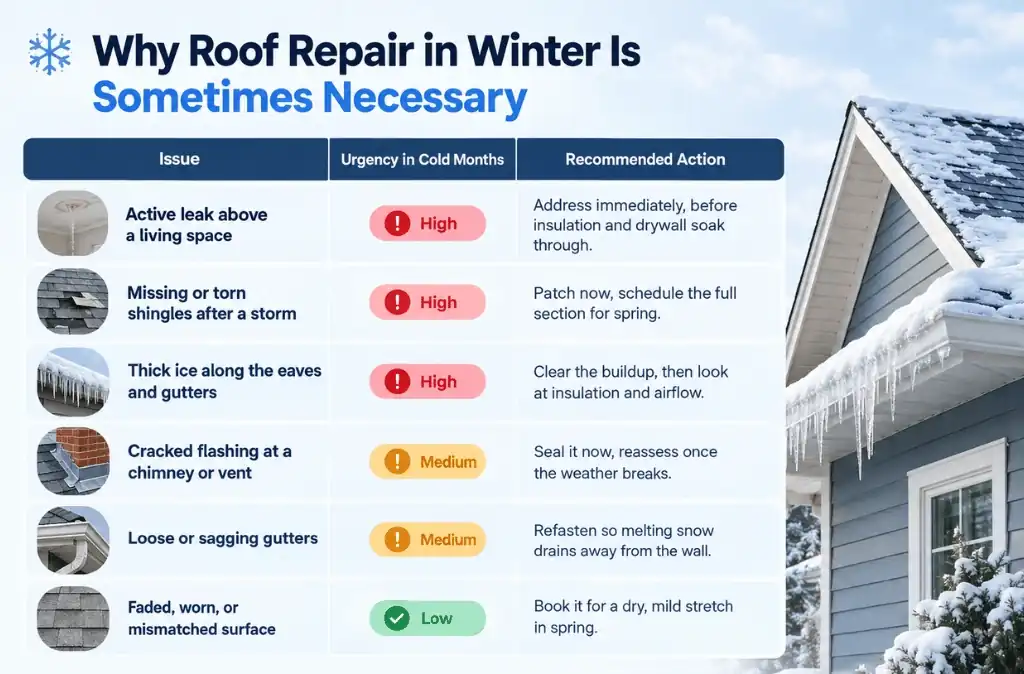
Waiting is not always an option. Homeowners often ask about the best time for roof repair, and the honest answer depends entirely on what is wrong. The table below compares common issues as you decide whether to call now or hold off.
| Issue | Urgency in Cold Months | Recommended Action |
| Active leak above a living space | High | Address immediately, before insulation and drywall soak through |
| Missing or torn shingles after a storm | High | Patch now, schedule the full section for spring |
| Thick ice along the eaves and gutters | High | Clear the buildup, then look at insulation and airflow |
| Cracked flashing at a chimney or vent | Medium | Seal it now, reassess once the weather breaks |
| Loose or sagging gutters | Medium | Refasten so melting snow drains away from the wall |
| Faded, worn, or mismatched surface | Low | Book it for a dry, mild stretch in spring |
Preventing Leaks and Water Damage
Snow sitting on a warm surface melts, runs down to the cold overhang, and freezes into a ridge that traps the next round of meltwater. Poor attic ventilation in winter makes the cycle worse by keeping the deck warm from below.
Once that trapped water finds a weak seam or a missing tab, it moves sideways under the shingles and into the ceiling. Mold can start growing in damp insulation within a couple of days, long before you notice a stain.
Stopping Structural Damage
Roof damage in winter tends to get worse faster than it would in summer. Moisture soaks into exposed plywood, freezes overnight, expands, and pushes the layers apart. Repeat that for a few weeks, and the decking softens, fasteners lose their grip, and rafters stay wet long enough to rot. Replacing a sheet of decking is a small job. Replacing framing is not.
Avoiding Higher Costs
Minor roof problems rarely stay minor once water is involved. A single lifted tab can turn into a stained ceiling, ruined insulation, and a paint job across two rooms. The cost of winter roof repair on a small patch usually runs a few hundred dollars, while interior restoration climbs into the thousands. Some insurance policies also push back on claims where the homeowner clearly delayed action on a known issue.
Tips for Winter Roof Repairs
A few practical habits make roof repair in winter go smoothly for everyone involved.
Hire an Experienced Roofing Contractor
Ask how many cold-season jobs the company completed last year and what they do differently below freezing. A clear answer tells you more than any advertisement. Confirm the license and the insurance certificate before work starts, and get the scope in writing. Professional roof repair in winter depends as much on judgment as on skill, including the judgment to walk away when a slope is too slick to stand on.
Be Flexible with Scheduling
A winter roof repair almost never lands on the exact day you booked it. Treat the first date as a target and expect one or two shifts around storms. You can help by clearing the driveway, moving vehicles well before the crew arrives, and keeping the area under the work zone open. A company that reschedules for safety is doing its job correctly.
Focus on Emergency Roof Repairs
Sort your list into what leaks and what looks bad. Holes, missing sections, sagging spots, and anything dripping into the house belong in the first group and need attention now. Roof repairs driven purely by appearance, such as mismatched color or a stained fascia board, will cost less and finish faster in mild weather. Spending your winter budget on cosmetics leaves less available when something urgent appears in February.
Trust the Process
Methods change with the temperature, and that is normal. Crews may hand-seal tabs with roofing cement instead of relying on the factory strip, adjust nail depth for brittle material, or work in smaller sections to limit exposure. Ask them to photograph the roof damage before and after so you have a record for your insurer. If a permanent fix has to wait for warmer weather, ask exactly what the temporary work covers and how long it should hold.
Final Thoughts on Roof Repair in Winter
Roof repair in winter can help homeowners address urgent damage before it becomes a larger, more expensive problem. While cold weather creates extra challenges, experienced roofing contractors can work safely around changing conditions. Addressing leaks, missing shingles, and other serious issues early helps protect your home all season.
At Atlas Roofing & Restoration, we understand that winter roof problems can be stressful, especially when weather conditions make repairs more complicated. Our experienced team can assess your roof, identify urgent issues, and recommend the right repair approach based on the season and condition of your roof.
Frequently Asked Questions
What Kind of Roof Damage Can Be Repaired in Winter?
We can handle most urgent problems in cold weather. We can repair active leaks, missing or torn shingles, cracked flashing, ice buildup along the eaves, and loose gutters. Full replacements and cosmetic work, such as mismatched color, are better scheduled for a dry spring stretch.
Is It More Expensive to Repair a Roof in Winter?
Sometimes, yes. The repair itself costs about the same, but snow removal, slower work, and extra visits add labor hours. That cost still stays far below interior restoration after a leak soaks insulation, drywall, and paint, which often climbs into the thousands.
What Materials Are Used for Winter Roof Repairs?
Crews use asphalt shingles kept warm before installation, roofing cement to hand-seal tabs that will not bond in the cold, and peel-and-stick membrane for patches. Ice-and-water shield protects vulnerable eaves, while tarps hold openings closed until temperatures rise enough for a permanent fix.