
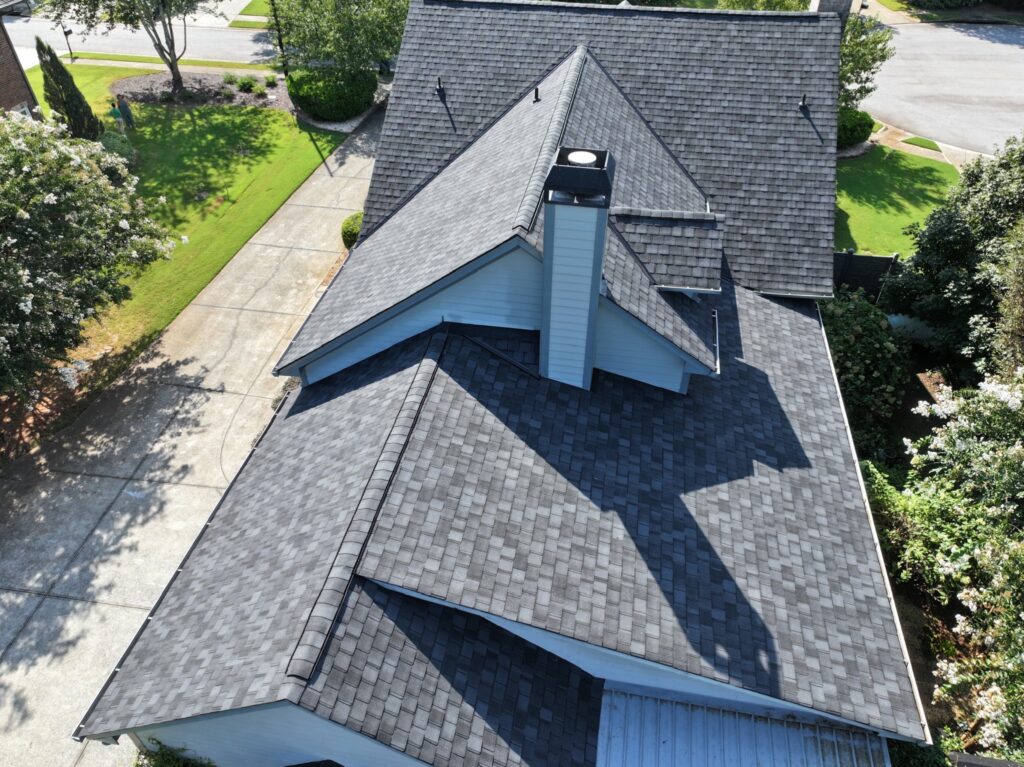
After a storm, the most useful thing you can do is make a clear record of the damage without putting yourself at risk. Stay off the roof. Take wide photos and close-ups from the ground and inside your home, keep the dates, and write a short list of what you see. Then book a free roof inspection so a roofer can check the areas you can’t safely reach.
Safety first
- Do not climb onto the roof. Wet or damaged shingles are slippery, and storm damage can weaken the decking.
- Stay away from downed power lines and call your utility company if you see one.
- If water is coming through a ceiling, turn off power to that area at the breaker panel, only if you can reach it without standing in water, and keep people out of rooms where the ceiling is sagging.
What you need
Your phone with the date and time stamp turned on, a notebook or notes app, and a ruler or coin for scale in close-up shots. If hail fell, a photo of a few hailstones next to a ruler or coin records their size before they melt.
Outside: what to photograph from the ground

- Each side of the house. Stand back far enough to get the whole roof line in one photo, then take a closer shot of any area that looks different.
- Shingles and pieces in the yard. Photograph them where they landed before you pick them up.
- Gutters and downspouts. Look for dents, bent sections and piles of shingle granules at the bottom of downspouts.
- Roof edges, vents and chimneys you can see. Use your phone’s zoom rather than a ladder.
- Fallen limbs or trees on or against the roof, from more than one angle.
- Siding, window screens, fences and outdoor items with dents or tears from hail or wind.
Inside: what to photograph
- Ceiling and wall stains, drips and wet spots. Photograph them the day you find them and again if they grow.
- The attic, only if you can get there safely: wet insulation, water marks on the wood and any daylight showing through.
- Damaged belongings where water came in.
Make your record easy to use
- Keep every photo unedited, with the date and time stamp on.
- Write down when the storm happened and when you first noticed each problem.
- Keep all photos and notes in one folder.
- Keep receipts for anything you buy to limit more damage, such as a tarp or buckets, and photograph the area before and after you cover it.
- Avoid permanent repairs until the damage has been documented. Your policy explains what it expects after a loss, so check it or ask your insurance agent.
When to call a roofer
Many kinds of storm damage, like bruised shingles, lifted tabs or cracked flashing, are hard to see from the ground. A free roof inspection covers the parts you can’t reach. We’ll photograph and document any hail or wind damage so you can share it with your insurance company. Decisions about your claim stay between you and your insurer.
If you are not sure whether to file a claim, start with our guide: Does homeowners insurance cover storm damage roof repair in Georgia? And if your insurer schedules a visit, read what to expect when the adjuster inspects your roof.
Frequently Asked Questions
Should I climb on my roof to take photos?
No. Take photos from the ground, from windows and inside your home. A roofer can inspect and photograph the roof surface safely.
How soon should I document storm damage?
As soon as it is safe. Your policy explains how quickly damage should be reported, so check it or ask your agent.
Can a roofer take the photos for me?
Yes. Atlas offers a free roof inspection, and we’ll photograph and document any hail or wind damage so you can share it with your insurance company. Decisions about your claim stay between you and your insurer.
Get a Free Roof Inspection
Atlas Roofing & Restoration serves homeowners from offices in Watkinsville, Athens, Winder and Rome. We inspect the roof, photograph what we find and give you a clear written estimate.
Watkinsville · Athens · Winder · Rome